Jeremy Purvis’ tribute to Jim Wallace

The House of Lords also paid tribute to Jim Wallace yesterday.

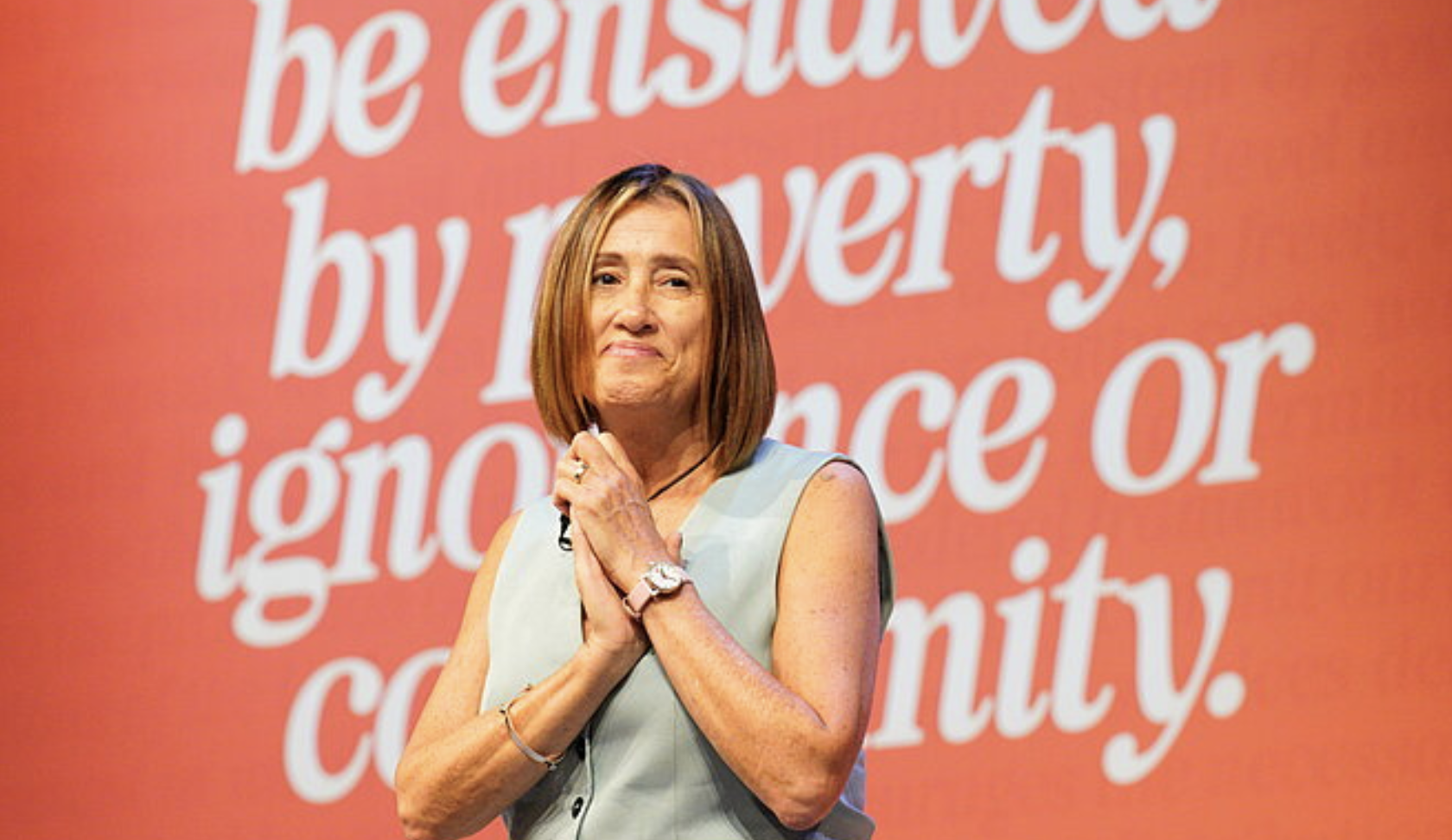
Our leader in the House of Lords, Jeremy Purvis led the speeches. You can watch here.

My Lords, many of us aspire to be a good politician, to do good and to be a good person. More times than not, we fall short. Jim Wallace was a good man who saw it as his role in life to do good things. He did, and they will last. With great sorrow, we have been denied the opportunity of hearing a valedictory speech in this House from Jim. He would have been characteristically modest. We can perhaps be a little immodest on his behalf for a now profoundly missed absent friend.

After his early political days in the lowlands of Scotland, he triumphed in its most northerly part. When he was elected, many said he was the MP for Jo Grimond’s seat, but in short order we referred to it as Jim Wallace’s Orkney and Shetland. As MP, MSP and Peer, he saw serving in Parliament as the means by which good things can be done, not the end in itself. He was what a parliamentarian should be.

When speaking in Parliament Hall on the day of the opening of the Scottish Parliament in 1999, Jim was achieving his ambition and the dreams of many in delivering what Gladstone could not a century before. He said to all those newly elected MSPs:

“As the people’s representatives we should never forget the hopes kindled by this historic opportunity”.

He approached his role to meet those hopes as the first Liberal in office since the Second World War with zeal: land reform, law reform, social reform, education reform, prison reform—radical but workable—and all have endured, none reversed. Jim was a reformer, but he knew that for reform to last, it had to be done well. He said of the new Holyrood:

“Our Parliament must be open and inclusive—willing to consult and willing to listen”.

That sentiment embodied his own approach to politics.

Posted in News | Tagged , and | Leave a comment
Advert

Willie Rennie’s tribute to Jim Wallace

It is part of Jim Wallace’s legacy that three of our MSPs worked for him in some capacity. Willie Rennie was the Chief Executive of the Scottish Lib Dems who helped us win 17 seats in the new Scottish Parliament in 1999. He then went to Holyrood to head up our operation there for the first term.

This is his tribute to Jim yesterday:

The text is below:

Posted in News | Tagged , and | Leave a comment

Alex Cole-Hamilton’s tribute to Jim Wallace

Alex Cole-Hamilton also worked for Jim Wallace – in the Scottish Parliament Liberal Democrat staff pool.

Here is his tribute in yesterday’s Scottish Parliament session, detailing when Jim and his wife Rosie first met. The rest of the speeches can be seen here.

The text is below.

Posted in News | Tagged , and | Leave a comment

Liam McArthur’s tribute to Jim Wallace

There have only ever been two MSPs for Orkney: Jim Wallace and his successor Liam McArthur. Liam worked for Jim as a Special Adviser when he was First Minister. You can see Jim’s influence in the way that Liam works to bring people together.

Yesterday the Scottish Parliament held tributes and flew flags at half mast. We start with Liam’s heartfelt tribute to his old boss and mentor.

The text is below:

Posted in Op-eds | Tagged , , , and | 1 Comment

The kindness of Jim Wallace

It has been said many times over the past few days that Jim Wallace was a kind man. It speaks volumes that almost everyone you might ask has an example of this kindness. Here is my own. It is a doubly useful anecdote because it is quite embarrassing for me, and very complimentary to Jim.

Just a day or two into the Shetland by-election of 2019, when I was but a stripling in the world of political campaigning, I was assigned to go door knocking with Jim and another gentleman whose name, face and history I have entirely forgotten. Despite being a newbie to the world of canvassing I was the only one of us with the know-how (and perhaps the necessary smartphone) to run the canvass sheet on Connect and work out where to go.

We headed out from Lerwick south towards Levenwick area, on a gorgeous, blustery August day, and began marching up and down hilly roadsides to knock doors. After some time and some progress I noticed that the next nearest place on our list had a whole host of names on the electoral register, and we duly headed in that direction. On reaching the address we discovered that this hub of voters was, in fact, a nursing home. After a brief discussion, Jim and I went in.

Let me reiterate now that I was a novice in the world of canvassing, and had not a clue about what the appropriate approach would be in this situation.

The appropriate approach, as you might now guess, is not to canvass that location. This is partly because it is seen as being an intrusion on the days of elderly people who have a right to a quiet life and a lack of bothersome campaigners, but mostly because in the eyes of seasoned and cynical campaign managers, it is a complete waste of time. If someone is in their 90s and in a nursing home, and they are going to vote at all, they have probably already made their mind up already – and possibly some decades prior – on which party will receive their ballot.

Posted in Op-eds | Tagged and | Leave a comment

Jim Wallace on 25 years of devolution

Today is going to be a bit of a Jim Wallace Day here. There have been so many wonderful tributes to him from people in and beyond the Liberal Democrats, a testament to how loved he was and how important he was a figure in Scottish life, not just politics.

But we start with his own words, a speech he gave in 2025 to Scottish Conference, three days before the election was called, marking 25 yesrs of the Scottish Parliament:

Grateful for the invitation to speak. Fascination with anniversaries which end in a 5 or a 0. I once heard the late Rev Gilliesbuig Macmillan, Minister of St Giles Cathedral, say how often he was invited to preach at a 50th, 100th, 125th anniversary of a church congregation, but added that if he’d been invited to speak at 129th anniversary he’d have accepted by return.

But 25 years is as good as any to reflect on the Scottish Parliament – what Donald Dewar described as ‘a new voice in the land’ – its successes or where it has fallen short of our expectations; and what contribution our party has made during these 25 years – and indeed before 1999 in helping to create and shape the Parliament.

When I was thinking about this, three particular memories came to mind.

Firstly, as an 11 year old in my final year of primary school, I was fascinated by the 1966 General Election and used to wait outside the school gates to get the autographs of the candidates arriving for their election meetings. Recognising this political interest, my father decided to take me to a meeting. It was the Liberal candidate, Roy Semple’s eve of poll meeting. As I recall my father saying, “It will be safe, there won’t be many people there.”

One vivid memory of that evening was the learning of the Liberal Party’s commitment to a strong Scottish Parliament within the United Kingdom. I thought it was a good idea then – and it still is today. 

Six years later, I joined the Scottish Liberal Party, having read Russell Johnston’s pamphlet ‘To be a Liberal’. And one of the real privileges of my life was to lead the party I joined, aged 17, into the Scottish Parliament, which distinguished predecessors had campaigned for, and which we, as a party through the Constitutional Convention, had done so much to shape. And not only into Parliament, but into government too. 

I have another memory of sitting on the Terrace of the House of Commons in about 1997 or 98, being lobbied by those who sought implementation of the Scottish Law Commission’s Report on facilitating the legal procedures relating to adults who lacked the capacity to enter into legal transactions. The prospect of the Westminster Parliament finding the time to legislate for such an exclusively Scottish reform seemed remote; but within weeks of the Scottish Parliament obtaining its powers on 1st July 1999, I had the privilege of bringing in the Bill to advance such a reform.

And my third memory was walking with my daughters from the place of the old Parliament, adjourned in 1707, to the site, albeit temporary, of the new Parliament for the official opening by our late Queen Elizabeth. We had campaigned for a family friendly Parliament and many of us were determined that our children should accompany us to the opening. The Presiding Office, David Steel, was under pressure from the GOC Scotland not to have children in the procession as it could upset the careful timing of the event. My wife wrote an impassioned letter to David making the case for the inclusion of children As David Steel admitted to me, when under pressure from GOC Scotland, om the one hand, and Rosie Wallace on the other, there was only one possible outcome and our children processed with us.

At long last we had the Parliament for which Liberals and Liberal Democrats had campaigned for over a century. And as the Scottish Liberal Democrat who had the privilege of leading the party into that Parliament and then into government, I recognise how much we owe to people like Jo Grimond, Russell Johnston, David Steel, Johnny Bannerman and countless other stalwarts who kept the fire of Home Rule burning through some very difficult and unrewarding times.

But as time marches on, I often feel that we need to remind people why we campaigned for a Scottish Parliament within the United Kingdom. 

Just over ten years ago, as Advocate General for Scotland, I was invited to address a class of first year law students at Aberdeen University. Before going in, the head of the Law School took me aside and said, “Just to be aware. Most of your audience can’t remember a Scotland without a Scottish Parliament.” And that was ten years ago. We have a new generation of young Scots who take the Parliament’s existence for granted. 

We have a generation who may well be politically aware, but who have no memory of the time when if Westminster, if we were lucky, might deal with two exclusively Scottish Bills in a year. We were proud of our distinctive legal system, but conscious in these days that it was a distinctive legal system without a distinctive legislature. 

Let’s recall that the first Act of the Parliament plugged a legal loophole which had led to a man who’d pled guilty to killing a neighbour being released from the State Hospital. Most commentators agreed that Westminster couldn’t and wouldn’t have acted so expeditiously. 

And in the years which followed Liberal Democrats in government contributed to an overhaul of mental health legislation. We implemented Scottish Law Commission reports on the abolition of the feudal system, which England had done in 1290; and modernised the law relating to tenanted property. We gave communities the right to buy land and gave individuals the right to responsible access over land; we established National Parks; introduced free bus travel for older people, free eye and dental checks abolished tuition fees, and introduced free personal care for the elderly and proper proportional representation for local government elections.

Perhaps most significantly, particularly in public health terms, was the ban on smoking in public places. We blazed the trail and the rest of Britain followed.

Nor was the 1998 Act a static settlement. It is a home rule settlement which has shown itself to be flexible in meeting Scotland’s needs and opportunities from the early devolution of powers which allow Scottish Ministers to develop our renewable energy resources; through the subsequent transfer of powers which paved the way for renewing Scotland’s rail infrastructure and enacting a more liberal freedom of information regime. And the powers of the Parliament were further increased by the Scotland Acts of 2012 and 2016.

Posted in Op-eds | Leave a comment

What democratic maturity asks of political parties

“A democracy is more than a form of government; it is primarily a mode of associated living”.

These were the words of John Dewey, from his 1916 book, Democracy and Education: An Introduction to the Philosophy of Education.

Without prior knowledge of Dewey’s work, I found that he captured my belief in democracy and its purpose in just one sentence. I have never believed that democracy is simply ticking a box or a group of people simply making decisions on behalf of others. It is about individuals making a collective decision about how their country should be run, what their society should look like, which views are acceptable to express and share, and which should be condemned. That decision changes over time. For political parties, this means democratic responsibility does not end when votes are counted. Accepting defeat is only the beginning; what follows is a test of patience, humility, and long-term commitment.

I also believe that political parties can never dictate society’s direction, no matter how much they want to. They must accept that, in a democracy, they are participants, not directors or masters. This means society can move in directions parties resist, and the response cannot be to burn down the house or to abandon principles in a rush to recover lost ground, but instead to embrace the loss and ask, “What can we learn from this?” It’s very easy to say, “Well, the voters were prejudiced?”, and there very well may be a degree of truth to that thought. But it doesn’t mean parties allow themselves to stay in a permanent sulk or adopt those views. Blaming the electorate and abandoning principles are, in different ways, attempts to avoid the more complex work of democratic reflection.

For the Liberal Democrats, that means democratic responsibility does not end when votes are counted; it also includes how we behave, organise, and learn in the space between elections.

Posted in Op-eds | Tagged , and | 8 Comments

Mathew on Monday: why compromise is not a dirty word – lessons from Rob Jetten, D66, and Dutch politics

British politics has developed a curious allergy to compromise. To concede ground is framed as weakness. To negotiate is to betray. To meet an opponent halfway is, we are told, to have no convictions at all. And yet, across the North Sea, one of Europe’s most successful democracies quietly carries on proving the opposite.

In the Netherlands, compromise is not a failure of politics. It is politics.

At the heart of that tradition sits Democrats 66 (D66), the liberal, pro-European party founded on the belief that democracy works best when it is open, plural, and willing to adapt. Under the leadership of Rob Jetten, D66 has remained unapologetically progressive while also engaging seriously with the hard, sometimes uncomfortable business of coalition-building.

The Netherlands’ latest government formation, which ended days ago with a minority government of D66, the the centre-right Christian Democratic Appeal (CDA), and the liberal People’s Party for Freedom and Democracy (VVD) – complex, drawn-out, and occasionally messy – has once again prompted familiar complaints from British commentators. Too many parties. Too much negotiation. Too much horse-trading. Surely, they say, this proves proportional representation leads to paralysis.

In reality, it proves something else entirely. Proportional representation reflects society as it is, not as a voting system wishes it to be. The Netherlands is plural, diverse, and ideologically varied – and its Parliament mirrors that reality. No single party gets to impose its will unchecked. Power must be shared, priorities must be argued through, and outcomes must command a broader consent than the wafer-thin mandates so often produced by Britain’s first-past-the-post system.

That is not democratic weakness. It is democratic maturity.

Posted in Op-eds | Tagged , , , and | 7 Comments

Christine Jardine: With Jim Wallace’s death, it feels like we have lost part of our conscience

In her Scotsman column this week, Christine Jardine has made many of us in Scotland cry. She wrote about Jim Wallace, about meeting him as a young reporter and then as a fellow parliamentarian.

I first met Jim Wallace in 1992 when I was a journalist with no political allegiance, and he had just become Scottish Liberal Democrat leader. I remember telling my husband and colleagues that he seemed like a decent bloke, and in some ways too ‘nice’ for politics.

That came back to me on Thursday when I learned of his death. Because in truth, that first impression was the one that stuck with me through the 30 years during which he influenced and shaped my personal and political direction, and the country’s.

It never felt like an overt, interfering influence. More like a favourite wise uncle whose opinion you would seek and whose approval you cherished. He was someone you felt was motivated by doing the right thing, not for political gain or to win votes, but to be fair and just.

Posted in News | Tagged , and | Leave a comment

Deep poverty rises again: Lib Dems have the policies to fix it

The new annual report of the Joseph Rowntree Foundation, UK Poverty 2026,  makes disturbing reading. Poverty was suffered by 21% of the population in 2023-4, more than 14 million people: the rate of 20-22% had been steady throughout the previous decade.  The average person in poverty had an income 29% below the poverty line of 60% of average income. But in its latest measurement, in 2023-4, the JRF found that 6.8 million people, almost half of those living in poverty, were in very deep poverty, with an average income an appalling 59% below the poverty line. This is the highest proportion of the population suffering very deep poverty on record, says JRF. They report that, around 3.8 million people experienced actual destitution in 2022, including around a million children. These figures have more than doubled since 2017.

‘The basic state of benefits continues to be around the threshold for destitution’ states the report. 

How has this chronic state of so many of our citizens come to this, and what is the Government doing about it? JRF explain that before the pandemic benefits were being cut, deepening poverty. Then a decade of weak growth in real incomes was succeeded by the pandemic and next the cost of living crisis, driving up the numbers of people lacking essentials and having to rely on emergency charity such as Food Banks (surely no longer considered so much as an emergency as a sadly necessary extra provision today).

The Government’s Child Poverty Strategy is indeed likely to reduce child poverty by 400,000 over the current Parliament. Scrapping the Two Child Limit for benefits, a long-held Liberal Democrat policy, is at the centre of the strategy. Child poverty is indeed a chronic need, but the DWP forecasts that over 4 million children will still be in poverty in 2029-30.

Which are the families most likely to be in very deep poverty? While being in work vastly reduces the likelihood of being in poverty, in-work poverty has been rising. And the JRF states that ‘Economic growth on its own will not reduce poverty.’  Indeed, they point out that growing living standards and falling poverty could be spurs to growth.

Posted in Op-eds | Tagged , , and | 46 Comments

Ed Davey’s message for LGBT History Month

It’s 1st February today so Ed Davey has written an article on the Lib Dem website in which he highlights this year’s theme, science and innovation and looks at the Lib Dems’ strong record in advancing the cause of LGBT+ rights.

He said:

This LGBT+ History Month we celebrate the contributions of LGBT+ people throughout history, reflect on the struggles they have faced and reaffirm our determination to make progress on equality.

LGBT+ people have always existed. From artists, activists and athletes to scientists, innovators and pioneers, they have helped shape our country and our world, even when their sexuality and stories were erased. This year’s theme, Science and Innovation, highlights the vital contributions LGBT+ people have made to fields from healthcare and engineering to environmental science and technology and reminds us that diverse voices have driven progress for everyone.

From Barbara Burford, a medical researcher who established NHS equality and diversity guidelines to Alan Turing, a mathematician who conceived modern computing and played a crucial part in the Allied victory over Nazi Germany in World War II, to Robert Boyle, a founder of modern chemistry and the modern scientific method, history is littered with the contributions of LGBT+ scientists. However, this month also calls for honesty. For too long, science has been misused to pathologise and marginalise LGBT+ identities, causing real harm. Still today, many LGBT+ people face discrimination in healthcare, education, housing and employment, as well as being victims of hate crime and hostility. No one should be made to feel unsafe, invisible or lesser simply because of who they are.

The Liberal Democrats have a proud legacy of leading the fight for LGBTQ+ equality. From repealing Section 28 – the Conservatives’ law which prohibited the “promotion of homosexuality” by local authorities – thanks to a clause moved by Ed Davey, to Lynne Featherstone’s tireless efforts to legalise same-sex marriage, and the former Liberal Democrat MP John Leech securing pardons for those unjustly criminalised for their sexuality, our party has always stood on the right side of history. That same commitment drives us today.

Posted in Op-eds | Tagged and | Leave a comment

Jenni Lang replies to the Toast to the Lassies

Yesterday, we brought you Charles Dundas’ Toast to the Lassies from the Edinburgh South Burns Supper.

The reply below comes from Scottish Party Convener Jenni Lang.

She mentions the “Naughty Table” which is a bit of a tradition started by me and a few friends about 15 years ago. We even brought our own sign to show where the most fun was to be had. Jim Wallace was doing the Immortal Memory that year and he started off saying “Ladies, gentleman, and, pretending to look at us disapprovingly, “the Table there.”

Jenni makes a lovely tribute to Jim, the man on all our minds last night. He was exactly the sort of person the world needs in abundance right now.

Enjoy:

Good Evening, and firstly, thank you so much to Charles for his kind words, and thank you to the SELD organisers and Faith for inviting me to make the reply on behalf of the lassies tonight, unexpectedly for the second year in a row! Here’s me thinking I was off the hook and allowed on the naughty table…but no!

It’s been quite the year since I last joined you, and frankly, the world feels significantly more fragile.

You look around at the carnage, at the chaos. And then you look at the global picture and wonder…..what’s missing?

The Women. The women are missing.

Remember the ‘Before Times’? The era of Angela Merkel, the world’s governess, who could stare down a dictator with nothing but a sensible blazer and a look of profound disappointment. She treated the G7 like a difficult parents’ evening.

Or Sanna Marin, a woman who could successfully navigate a Finnish winter, join NATO, and still find time to go to a party without the world ending. She proved that you can run a country with one hand and hold a glow-stick in the other, which is still infinitely more dignified than anything most male leaders do with an X account.

Or Jacinda Ardern, who managed to run a country, raise a child, and show basic human empathy all at the same time.

Since the women have stepped down, it’s like the adult supervision has left the building. We’ve traded ‘steady hands’ for ‘shaky egos,’ and ‘global stability’ for ‘whatever happens when a billionaire gets bored at 3:00 AM.’

Now, for those of you who were here last year, you may remember my fond reflections on the different species of Liberal Men I’ve encountered in the party over the last 25 years. The Liberal Gentlemen, like the wonderful Charles; the Policy Geeks; and the Super-Campaigners who can’t look at a letterbox without feeling an uncontrollable urge to shove a leaflet through it.

But let’s be honest….those are the ‘domesticated’ varieties.

It feels only right that we widen our scope this year to the Alpha Males currently roaming the global stage.

Over the years, I’ve realised that these male world leaders fall into a few distinct archetypes. Much like whisky regions, each has its own distinct aroma, its own fiery finish, and, in most cases, a very high probability of giving you a massive headache the next morning.

So I decided to highlight a few of note……let me know if any sound familiar…..
First, we have the Narcissist Billionaire…..the only man on earth who can look in a mirror and see a victim of radical leftist conspiracy looking back.

He is a man who has never met a ‘Fact’ that couldn’t be improved with a gold-leaf border and a bit of imagination.

This leader operates on the principle that success is measured entirely by the size of your skyscraper, the height of your hair, and the sheer, aggressive boldness of your font.

He runs a country the way he runs a golf course: loudly, expensively, and with the firm belief that ‘par’ is whatever he says it is. To him, ‘cheating’ is just another word for ‘winning,’ and ‘the Truth’ is something that happened to other, less successful people.

He believes diplomacy is best conducted via capital letters on social media, preferably at 3:00 AM, in a fever dream of AI-generated images showing him as a Roman Emperor or a muscle-bound Rambo.

In his world, Facts are optional extras, like the sunroof on a car. Advisors are purely decorative…like the salad that comes with a steak. And if something goes wrong, it is never his fault. It is the fault of the media, the judges, the deep state, or….as we know all too well in Scotland……. windfarms that are ‘killing all the birds’ making us poor, and ruining the view from his 9th hole.

At the other end of the spectrum, we have the European Technocrat.

This leader does not ‘rule’…..he administers. He doesn’t have a ‘base’; he has a ‘stakeholder group.’ And he doesn’t give speeches so much as he issues software updates for society.

He believes deeply in three things:

Committees.

Sub-committees to monitor those committees.

And a Bold Vision for 2047, pending consultation.

He will never shout, he will never boast, and he wouldn’t dream of threatening you. Instead, he will ‘express grave concern,’ commission a three-year feasibility study, and ‘harmonise a framework’ until everyone in the room falls asleep.

He has the unique ability to make a declaration of peace sound like instructions for assembling IKEA flatpack furniture. He doesn’t ‘seize power’; he ‘coordinates a multi-level, transitional regulatory alignment.’

Posted in Op-eds | Tagged , and | Leave a comment

Tom Arms’ World Review

Iran

Two weeks ago, Donald Trump messaged the Iranian people and its leadership that the US was “locked and loaded” and ready to come to the aid of the demonstrators.

This week he has despatched a “beautiful armada” to the region. Not to support the demonstrators. No, the objective has changed. He has sent the armada to force a deal on Iran’s nuclear programme.

This obviously means that Trump’s attack on Iran’s nuclear production facilities failed. At the time he said it was a “total success” that “annihilated” Iran’s nuclear facilities. Surprise, surprise, Trump lied.

But more importantly, he is also lying to the people demonstrating on the streets of Tehran and all the other cities in Iran. He led them to believe that the US was on the verge of military intervention in Iran to topple the increasingly unpopular mullahs.

Because of Trump’s words, Iranians continued to flood onto the streets to demonstrate. The Iranian Revolutionary Guard, for its part, continued to shoot the demonstrators. One human rights organisation estimates that 25,000 Iranians have been killed by the regime since demonstrations began at the start of the year.

Determined demonstrators continue to pour onto the streets. The regime’s soldiers are equally determined to keep the mullahs in power by quelling the riots with bullets and blood.

Using the military to force regime change is wrong, even one as despicable as the Iranian theocracy. It is against international law.  But it is immoral to encourage to take to the streets where they are murdered when you have no intention of helping them.

Minnesota

The murder of Alex Pretti has forced Trump to pull back in Minneapolis. He didn’t want to. It was obvious that the president preferred to follow the line of Kristi Noem, Secretary for Homeland Security, in branding the ICU nurse a “domestic terrorist.”

But “domestic terrorist” Pretti most clearly was not.  Anyone equipped with a pair of eyes  who bothered to watch the video of Pretti’s murder could only reach one conclusion: he was unlawfully killed by ICE agents.

Every murder—especially one by federal agents—is a tragedy and Minneapolis and and the state of Minnesota have suffered an unfair quota of tragedies. It started towards the end of Trump’s first term when George Floyd was killed by the Minneapolis police.

Then last June state representative Melissa Hortman, her husband Mark and their dog Gilbert were shot dead. At about the same time Minnesota state senator John Hoffman and his wife Yvette survived another shooting.

With the arrival of 2025, relations in the city appeared to be improving. that 2025 was the first year since the George Floyd murder that the Minneapolis Police Department was able to recruit enough new officers to more than offset losses.  Crime rates were significantly down. Relations between the Minneapolis PD and most citizen organizations were improving.  The city’s centre-left mayor was re-elected by a good margin, rejecting the far left alternative by a wide margin. Things were calm.   Things were calm.

Posted in Op-eds | 3 Comments

A toast to the lassies!

One of the highlights of the Edinburgh Lib Dems social calendar is the South Edinburgh Burns Supper which I’ve been going to for probably 15 years now.

I have seen Alex Cole-Hamilton dressed as a mouse being chased by one time LDV contributor John Knox reciting the programme To a Mouse. I kid you not.

It’s always guaranteed to be a good night. If you are ever in Edinburgh, the food at Mortonhall Golf Club is brilliant and the bar prices are incredibly reasonable for a city venue.

I thought you might be interested in reading the Toast to the Lassies by Scottish Campaigns and Candidates Convener Charles Dundas and the reply, which I’ll post tomorrow, by Scottish Convener Jenni Lang.  There’s a lot of relevant political observation amidst the gentle roasting.

One person very much on all of our minds was Jim Wallace. I was relieved to be able to spend time with the Lib Dem family as we come to terms with his sudden loss. Everyone had so much love and admiration for him and there were few dry eyes in the house when Jenni Lang talked about him in her reply.

Anyway, enjoy Charles’ toast. His fears of imminent cancellation are premature, I feel.

Posted in Op-eds | Tagged , , and | Leave a comment

Evidence beats ideology: What Hampstead Ponds tells us about trans inclusion

Last Thursday brought two moments that should settle the trans inclusion debate, if we’re willing to listen to evidence. The High Court refused permission for judicial review of Hampstead Heath’s trans-inclusive bathing policy. The same day, the City of London published consultation results showing what 38,445 people actually think about it.

The media focused on the court ruling, spinning it as women being “denied justice.” That’s nonsense. Mrs Justice Lieven simply said Sex Matters used the wrong legal procedure – they need a County Court discrimination claim, not judicial review. Standard civil procedure, not conspiracy.

The real story is what nearly 40,000 people said when asked about their actual experiences.

What the evidence shows

The numbers are overwhelming. 86% agreed the ponds should continue operating as trans-inclusive spaces. Only 13% wanted strictly biological sex-based access.

Among the 84% who had actually swum at the ponds, 81% reported positive experiences, 10% reported negative experiences, and 2% reported mixed experiences. Two-thirds had used the ponds within the previous three months. These are people describing what actually happens, not what they fear might happen.

The consultation tested several “compromise” positions. Every single one was rejected by overwhelming majorities.

Separate changing rooms for trans people: 90% disagreed. Characterised as discrimination and segregation.

Timetabled sessions with designated “trans times”: 90% disagreed. Respondents raised serious concerns about making trans people visible and vulnerable, increasing safety risks.

Mixed-sex facilities open to all: 66% disagreed. Opposition came mainly from people who want to preserve gendered spaces whilst supporting trans inclusion within them. The ladies’ pond as a sanctuary from cisgender men was repeatedly emphasised.

What this means for liberal policy

The findings challenge common assumptions. “Women feel unsafe with trans women present” – not according to 81% of pond users. The real safety concern raised repeatedly was about cisgender men, which is why respondents opposed making the ladies’ pond mixed-sex.

“This is a binary choice between women’s rights and trans rights” – people overwhelmingly reject this framing. They want gendered spaces that include trans people in those spaces.

“Compromise positions balance competing needs” – the consultation tested several. Each failed because they created discrimination, stigma, and practical problems worse than either maintaining or changing the current policy.

Proportionality means assessing whether restrictions achieve legitimate aims with minimum necessary harm. The consultation provides exactly that evidence. When you ask people about actual experiences rather than imagined fears, you get very different answers.

The case for evidence-based rights

A Just Society’s “Human Rights for All” policy demonstrates what evidence-based rights protection looks like: specialist advocacy for those experiencing harassment, accelerated fair legal gender recognition, and independent oversight of systems that affect people’s lives. The full policy is at ajustsociety.uk, but the principle is simple: dignity isn’t divisible, and evidence shows what’s possible when we trust it.

Now Sex Matters faces a choice. They can bring a County Court claim, but they’ll need to demonstrate the City of London’s approach isn’t proportionate when 86% support current arrangements, 81% report positive experiences, and every tested alternative created worse problems.

That’s harder than “the Supreme Court said sex means biological sex, therefore trans women must be excluded.” The law on single-sex services is more nuanced, and the evidence from Hampstead shows why.

What liberalism actually requires

Posted in Op-eds | Tagged and | 2 Comments

Artificial intelligence and the Liberal Democrats: a practical opportunity

Artificial intelligence is already shaping how organisations analyse information, plan activity, and communicate. For the Liberal Democrats, AI offers a practical way to work more effectively, engage members better, and understand voters more clearly, while remaining aligned with liberal values.

One of the most immediate applications is voting and demographic data. Parties collect large volumes of information through canvassing, surveys, and local engagement. AI can help analyse this data responsibly, identifying trends, emerging concerns, and under-represented voices. Used well, this supports inclusion and improves how policy and messaging reflect real community priorities.

AI also has a role in strengthening the internal functioning of the party at local and regional levels. Local parties and regional structures manage policy development, casework, campaigns, and member engagement, often under time pressure. AI tools can support learning, policy development, and administration by organising research, summarising consultations, assisting with drafting, and maintaining shared knowledge resources.

To address these opportunities and challenges, a proposed AO focused on artificial intelligence is being explored. This AO would act as a central hub to support members at all levels of the party. It would provide a safe and supportive environment for learning, where members can build understanding without fear of being challenged or exposed, while still encouraging thoughtful discussion.

Posted in Op-eds | Tagged and | 6 Comments

Observations of an Expat: Middies United

Canadian Prime Minister Mark Carney spoke common sense. The world is changing. Might is right is replacing the rule of law. It is time for the middle powers to lift their heads out of the sand, look around and start discussing international systems that do not involve holding onto the coattails of greater powers.

Europe, Japan, Britain, Australia and others have enjoyed the American military and economic umbrella for the past 80 years. They have prospered inside a US-protected system but were largely denied the opportunity to shape their nice, warm American-made cocoon and now can’t easily or safely exit it.

Britain, possibly more than any other country, has allowed itself to become a dependency of the United States. The British nuclear deterrent cannot be delivered without US-made Trident missiles. Five Eyes is dominated by America’s National Security Agency. Key defense equipment comes from the US and Britain has supported Washington in almost every post-war military operation (Vietnam is the big exception). Finally, the British and American financial systems are locked together, and each country is the single biggest investor in the other.

It is unrealistic to expect Britain to completely disentangle itself from the United States. It can, however, create options and alternatives to ensure that its own power does not exist only as a derivative of the US.

It can seek greater cooperation with France in developing each other’s nuclear deterrent. This would involve working together on warhead production and storage, command and control procedures, alternative delivery systems and a nuclear doctrine which reflects the needs of both middle powers.

Britain is out of the EU. It is not returning anytime soon. But that does not mean it cannot improve relations with Brussels. Rejoining the single market is probably a step too far but a return to the customs union benefits both sides while keeping options open.

Conventional military independence is also best achieved through coordination with Europe. Ukraine—coupled with Trump’s unwillingness to be involved—is providing an impetus to develop a more independent defense industry.  But there is no way that any European country has the economic infrastructure to replace America’s defense industries on their own, but if each were to specialise than the collective result could potentially dwarf the US and strengthen the European arm of NATO.

Posted in Op-eds | 2 Comments

ALDC by-election report, 29th January

There was only one by-election this week. This was caused by the former councillor being sentenced to over 12 months in prison and therefore was disqualified.

In Scotland, the Conservatives couldn’t hold this seat and their first preference votes slipped to sixth place. We secured a commanding victory, with SNP and Reform trailing well behind us. Congratulations are due to Councillor Ben Langmead and the local team for this strong result, ahead of Scottish Parliament elections in May.

East Dunbartonshire Council, Bearsden South
First preferences:
Liberal Democrats (Ben Langmead): 1,744 (38.1%, +14.9)
SNP: 789 (17.2%, –6.2)
Reform UK: 709 (15.5%, new)
Labour: 650 (14.2%, –1.9)
Scottish Greens: 371 (8.1%, +0.9)
Conservative: 283 (6.2%, –17.0)
Scottish Family Party: 35 (0.8%, new)

Liberal Democrat GAIN from Conservative
Elected at Stage 5

Turnout: 42.7%

Thank you to all of our candidates, agents, and campaign teams. A full summary of these results, and all other principal council by-elections, can be found on the ALDC by-elections page here.

Posted in News | Tagged | 11 Comments

Introducing The Jenkinsite Group

For the longest time, I have regarded myself as a “Jenkinsite”. For many in the Lib Dems, they will understand what that means. For those who aren’t in the party or aren’t as clued up on political history, I’m usually met with the response, “A what?”

For the avoidance of doubt, a Jenkinsite is someone who supports the ideas espoused by Roy Jenkins. They usually consist of:

  • Multilateralism
  • Electoral reform
  • Social democracy
  • Social libertarianism
  • Liberal internationalism
  • Pro-European Integration
  • Support for a social market economy

Small differences in the extent to which someone believes in each tenet or how they interpret them may occur, as with every political ideology, but that is, for the most part, the meat and potatoes of Jenkinsite politics.

I digress: 13 days ago, I posted on Bluesky about being a Jenkinsite, which led to a conversation with another Liberal Democrat member about creating a Jenkinsite group. While groups like the Social Liberal Forum exist, which could be argued to be very similar in nature, this would be a group for people interested specifically in the Jenkinsite strand of politics, as well as the political history surrounding Roy Jenkins, the SDP and Liberal Party alliance, and, of course, the formation of the Liberal Democrats.

So, that’s what I decided to do. On Friday, 16 January, I created The Jenkinsite Group on Facebook. The brief for the group is simple: a community for Lib Dem members and supporters who wish to a) influence party policy with Jenkinsism, b) discuss and debate political ideas, and c) discuss political history and share our own political journeys and experiences.

As of today, we have 94 members.

It’s a mix of lay Lib Dem members and supporters, councillors, and even a member of the House of Lords!

The invite is open to all Lib Dems who are interested in joining us.

If that’s you, then just click this link.

Posted in Op-eds | Tagged and | Leave a comment

Jim Wallace has died

I know that everyone reading this will be as shocked and sad as I am to hear of the terrible news that Jim Wallace, a giant of this Party, died today. We send our love to his wife Rosie, and his daughters Helen and Clare.

Jim’s death was announced by Alex Cole-Hamilton:

The Scottish Liberal Democrats today announce with great sadness the passing of Jim Wallace, Lord Wallace of Tankerness, former Deputy First Minister of Scotland and a towering figure of modern Scottish liberalism.

Jim Wallace was born in Dumfriesshire and educated at Annan Academy before attending Cambridge and Edinburgh universities. He was called to the bar in 1979, practising mainly in civil law cases, and became a QC in 1997.

Jim was elected to parliament in 1983 as MP for Orkney & Shetland, succeeding Jo Grimond, and held the seat for 18 years, earning a formidable reputation as a diligent constituency champion and a respected voice at Westminster. After becoming leader of the Scottish Liberal Democrats in 1992, he led the party through the Scottish devolution referendum in 1997, having also been a member of the Scottish Constitutional Convention which created the blueprint for devolution and a Scottish Parliament.

Upon the establishment of the Scottish Parliament in 1999, Jim was elected as MSP for Orkney and became Deputy First Minister of Scotland, serving in government from 1999 to 2005. He became acting First Minister while Donald Dewar underwent heart surgery in April 2000, after Dewar’s death in October 2000 and again following the resignation of Henry McLeish in 2001.

He also held the roles of Minister for Justice and later Minister for Enterprise and Lifelong Learning, playing a central role in the early years of devolution and helping to shape Scotland’s modern political settlement. He also established a world-leading freedom of information regime.

He entered the House of Lords in 2007 as Lord Wallace of Tankerness, where he remained an authoritative and thoughtful contributor on constitutional, legal and Scottish affairs, including serving five years as Advocate General for Scotland.

Jim also served as the Moderator of the General Assembly of the Church of Scotland from 2021 to 2022.

Alex Cole-Hamilton, who worked for our MSPs in the Scottish Parliament when Jim was leader, said:

Jim Wallace was one of the architects of modern Scotland and one of the finest liberals our party has ever produced.

He believed deeply in devolution as a way to give people better services and more control over their own lives and he lived a life of public service right up until the end.

For me personally, he was a mainstay of support throughout my adult life. Even as he went into hospital for the final time, he was still sending me words of advice and I will always try to live up to the standards he set.

Throughout his career, Jim was widely respected across party lines for his integrity, calm judgement and deep belief in liberal values: fairness, the rule of law and respect for communities, no matter how remote.

Scotland is a better country because of Jim Wallace, and the Liberal Democrats are a better party because of his example.

Alistair Carmichael, Jim’s succsssor as MP for Orkney & Shetland, said:

Jim Wallace gave his adult life to serving the people of the Northern Isles, Scotland and the United Kingdom. His sudden and tragic death leaves a huge gap in public life. For those of us who knew him as a friend and for his family that gap is one that we shall struggle ever to fill.

In the world of politics, having people on whom you can truly depend is a rare and precious thing. For me, Jim was someone who was there through good times and bad and I am bereft at his passing. I shall miss his acute political analysis, his warm and occasionally waspish wit and, most of all, his easy company and friendship. He was never someone for whom I had to present a front.

My thoughts are with his wife Rosie, his daughters Helen and Clare, his mother and his brother Neil who I know are heartbroken at this moment. I hope that they may eventually take some comfort from the knowledge that the man that they loved in their family was loved by so many others too.

Liam McArthur, Jim’s successor as MSP for Orkney, said:

Posted in News | Tagged and | 6 Comments

In the great sea of British Politics, the Lib Dems are stuck

On the morning of Friday 5th July 2024 the HMS Lib Dem had never been so full, or so well built. It was in a near perfect position to head out of the harbour; well stocked with policy and a new crew capable of navigating new waters and new challenge.

Its main rival reduced to nothing more than a wreck after nine long years of mutiny after mutiny, and crashing into every obvious rock and hidden iceberg it possibly could. HMS Tory was all but sunk. Sure, HMS Labour eclipsed both in terms of size and grandeur but it hadn’t yet realised that her foundations were rotten. The hull already letting in water.

HMS Reform was still being hastily built out of every reactionary plank of wood it could find. But with a formidable Captain, it wouldn’t be long before it could raise the skull and crossbones and begin pillaging, dividing the populist spoils.

But after a year choppy waters and after over a year at sea the HMS Lib Dem finds itself stuck at sea. Not heading in the right or wrong direction but stuck. The rest of the fleet might be moving in the right or wrong direction, but at least they’re moving.

If the Liberal Democrats are to get moving it needs to find its wind again and the easiest to find is Liberalism. Liberalism has never thrived when it sees the State as the solution to societal and economic problems.

The new aged based social media policy is a prime example of this, it adds layers of bureaucracy and Government intervention that will never be able to keep up with technology. It assumes government is the solution rather than education. Rather than educating children about the risks of social media it encourages young people to educate themselves about VPN’s, loopholes and the Dark Web. It assumes that our educators are ill equipped to tackle these issues. That may well be the case currently, but the solution isn’t more red tape, but more funding for education.

Posted in Op-eds | 21 Comments

Our latest party political broadcast

This was broadcast earlier this evening, but in case you missed it, here it is again:

Posted in News | Tagged | 1 Comment

Orange throwing at the Federal Board? That’s new!

The new Federal Committees took office on 1st January and we always like to know what’s going on in them.

In the internal elections last year, Janey Little was elected, alongside Prue Bray and Hannah Kitching as one of the three directly elected members.

The Board had its first meeting recently and Janey took to Instagram to give us a flavour of what it was like.

I spent 10 years on the Federal Board and its predecessor, the Federal Executive, and not once can I remember any fruit being harmed in the pursuance of our Liberal Democrat values. The orange throwing ice-breaker sounds intriguing and fun, though I’m glad I never had to do it. My hand-eye co-ordination is, shall we say, sub-optimal. I’m just slightly disappointed that there is no video.

Enjoy Janey’s video below.

Posted in Op-eds | Tagged , , and | Leave a comment

Why banning social media for under-16s would harm queer young people

Social media is a problem. It is addictive, it has damaged attention spans, and with the rise of AI bots it is increasingly polluted by content that is fake, manipulative, or actively harmful. These are real issues, and they deserve serious policy responses.

That said, my view on this is simple: a blanket ban on social media for under-16s – especially in the world as it currently exist – is a bad idea. Worse, it risks causing serious harm to one particular group of young people: queer children.

For many queer children, being different in who you are comes with a price that we cannot shake: the quiet but constant cost of standing out in environments that still reward conformity and punish difference.  I was one of the lucky ones. I went to secondary school in a fairly affluent part of Eastbourne, and by the end of Year 9 most of the queer and neurodivergent students (a Venn diagram that is practically a circle) had found each other and formed one social group—loosely shepherded by an equally neurodivergent head of music.  

However, I know many people, including several friends and, indeed, my partner, who were not so lucky, and being a young queer kid led to social ostracism – and not just at school.  Some people in my social circles had their teenage years in the New Labour era, before the axe of austerity led to the end of most council-run Youth centres.  However, they have told me that even with the existence of these essential third spaces, they were not places they could go.  Queer kids got beaten up.  If you were gay or trans then there wasn’t a hope in hell of being accepted by your peers, not that the aftershocks of Section 28 made this any better.  

(As an aside, If you want an excellent insight into what it was like to grow up queer in the UK, I’d strongly recommend watching What It Feels Like For A Girl – which is based on the memoir by Paris Lees.)

Posted in Op-eds | Tagged , and | 5 Comments

In response to Dominic Rider: confederation is comfort, federalism is capability

Dominic Rider is right about the moment we are in. The transatlantic guarantee is wobbling; Europe is being reminded, again, that dependence is not a strategy. When Washington treats alliances as transactional, Europeans either grow up fast or get pushed around slowly. The Liberal Democrats should say what comes next.

Where I part company with Dominic is on the destination. He argues for “confederation, not a superstate”. That contrast misses the real problem. Europe already exercises power: the single market sets rules, sanctions shape foreign policy, and standards shape economies. The question is not whether Europe will have power; it is whether that power is democratically governed and has clear lines of responsibility.

A confederation keeps the fog. It offers reassurance, but it leaves the constitutional flaw untouched: paralysis. Dominic is right that unanimity lets one government block action. Qualified majority voting helps, but procedure alone will not fix a system designed to avoid clarity. A Europe that wants to act like a strategic player needs institutions built for action, not for reassuring capitals.

Federalism is the democratic solution. A federal United States of Europe is not the abolition of nations; it is the constitutional ordering of shared power. It means voters can see who governs, what they control, and how to change course. That is not a “superstate”. It is power placed under law, limited by a written settlement, and answerable to citizens.

The principle is simple: do together what must be done together; keep the rest close to home. Defence, trade, external borders, major infrastructure, and climate commitments belong at the federal level because they are cross-border by nature. Taxation, welfare, health, education, culture, and constitutional arrangements should remain national, devolved, or local because diversity is a strength. Subsidiarity should not be a slogan; it should be enforceable.

Defence is the acid test. Pooled procurement is valuable, but deterrence cannot rest on voluntary top-ups and ad hoc deals that unravel whenever politics shift. If Europeans want strategic autonomy, they need a single security actor: capability planning that matches threats, industrial scale to reduce duplication, and a chain of command that is democratically accountable. Committees do not deter revisionist powers; credible forces and clear commitments do.

The “superstate” fear is real, but it is misaimed. What people resent is unaccountable decision-making. The EU already has a far-reaching influence, just in a hybrid form where citizens struggle to “throw the rascals out”. Federalism does not add power for fun; it puts existing power under democratic control, clarifies competencies, and makes responsibility legible.

That is also the British opportunity. Public opinion has shifted; more voters now believe Brexit was a mistake. Yet that sentiment will remain politically inert unless someone offers a serious answer to the next question: rejoin to do what? Labour treats Europe as a problem to be managed, not an opportunity to be seized. Conservatives are trapped by their own coalition. The Liberal Democrats have the freedom, and the duty, to lead.

But leading means more than tiptoeing back into yesterday’s Europe. People can smell timidity. They will not rally to “rejoin, but change nothing”. A federal programme is clearer: Britain should return to help build a Europe that can defend itself, compete economically, and uphold liberal values, not just with speeches.

So what should Liberal Democrats argue for? Treaty reform towards a constitutional settlement: an elected European executive accountable to an elected parliament; a senate of states to protect national voice through transparent votes; majority decision-making where collective action is required; and hard subsidiarity so everything not explicitly federal stays closer to the citizen. That is how you make European power democratic.

Posted in Europe / International and Op-eds | Tagged and | 12 Comments

Securing the United Kingdom in a changing world: Why Mark Carney was right at Davos.

In a world still reeling from rapid geopolitical shifts, the question of national security and strategic autonomy has never been more pressing for the United Kingdom. The post-Second World War era of a relatively stable, rules-based international order – underpinned by multilateral institutions, shared norms, and strong Western alliances – is being challenged on multiple fronts. Nowhere was this tension clearer than in Mark Carney’s landmark address at the World Economic Forum in Davos last week, where he delivered a stark analysis of the changing global order and what it means for middle powers like the UK.

Carney’s central thesis was that the international system is not merely evolving – it is rupturing. For decades, the UK, alongside its allies, benefited from what was labelled a rules-based order: predictable trade, collective security, open sea-lanes, and multilateral dispute resolution. But that era is increasingly giving way to a world dominated by great power rivalry and economic coercion. According to Carney, we are now in “the midst of a rupture, not a transition” – a point that resonates as global leaders grapple with the reality of a more volatile geopolitical landscape.

This rupture is characterised by powerful states leveraging economic integration as a strategic tool and weapon — using tariffs, supply-chain dependencies, financial infrastructure, and energy ties to bend smaller partners to their aims. Carney warned that continuing to rely on outdated assumptions of mutual benefit is no longer tenable when integration itself can become a source of subordination.

Much of the backdrop to Carney’s analysis is the reality of the international leadership exerted by the United States under President Donald Trump, whose policies have unsettled long-standing diplomatic norms. Trump’s aggressive trade stance – including tariff threats tied to strategic interests such as Greenland – and his readiness to prioritise unilateral action over multilateral cooperation have highlighted the fragility of previous assumptions about Western unity.

While Carney refrained from naming Trump directly in his speech, the subtext was unmistakable: the security environment that the UK has long relied upon – anchored by predictable American leadership – is no longer guaranteed. The UK can no longer take for granted that allies will act within established norms or that economic integration will safeguard its interests.

What this means for the UK and for us as Liberal Democrats

Posted in News | Tagged , , , and | 1 Comment

Why does the exodus of Poles from the UK continue?

A decision to move, anywhere, is often difficult. Moving to another city, moving house, moving because of better jobs, or simply moving to seek advancement of life opportunities can be exciting and challenging at the same time. There are those, who can and those, due to war and procession, who must flee to safety.

My story, and the story of many Eastern European migrants, who came to Britain after the enlargement of the European Union is no different. We also came for a lot of different reasons. By 2016, the famous “Brexit year”, around 1 million Poles lived and worked in the United Kingdom. Although the migration of Poles to the UK has a long history, due to communism, martial law, and a difficult set of political circumstances between the years 1945 – 1989, such a high number of migrants made a huge impact on Britain, but also on Poland.

In recent months, there have been many reports in a number of media outlets about the exodus of Poles from Britain. It is true; according to the Office for National Statistics, around 25,000 Poles left the UK and returned to Poland.

Over the years, and in particular since Britain voted to leave the EU, the story of Eastern European migrants has not been portrayed in a positive light. It felt at times that we are a problem, not a solution to some of the challenges that the UK economy has been facing for more than a decade now.

So why are so many of my countrymen and women decided to leave these shores and start the process of reintegration and se-settlement back home? The answer is never easy and it has a lot of caveats, however in my opinion there are 3-4 main reasons.

According to the World Bank, in 2005, Poland’s GDP was approximately $306-$310 billion. 20-22 years later, it is likely to reach $1 trillion. The Polish economy grew three times in the last 2 decades. That’s a phenomenal result. Poland was the only European country that avoided recession during the 2008-2009 financial crisis. Secondly, and without a doubt, accession to the European Union meant a rapid and steady growth, which was supported by various investments in a number of key regional and national infrastructure projects. Whilst Britain’s economy has stagnated for years now, Poland continues to grow between 3-4% each year. In Britain, we have experienced much higher living costs, less competitive labour market, as well as more strict visa and immigration rules, which also apply to EU nationals. In my opinion, ending of the free movement has proved to be a “political suicide”, which meant to help and reduce the number of migrants arriving to the UK, however the net migration went significantly up.

Posted in Op-eds | Tagged , and | 1 Comment

What history might teach us about the 2028 US Election

In America, it is conventional political wisdom that the campaign for their next presidential election begins the day after the last one. A recent opinion poll suggests that half of Americans are already considering the far-off 2028 race, although this may be testament to the unpopularity, corruption and chaos of Trump and his second administration.

The 2025 off-year elections in the US were the first opportunity for voters to rebuke Trump with many local and down-ballot elections receiving greater attention and the Democrats making a clean sweep wherever they were held. With a blue wave is anticipated at the 2026 midterms, Republicans have either undertaken gerrymanders or announced their intention not to run again.

From a British and Liberal Democratic perspective, we have welcomed Democratic wins as signs that Americans still support democracy. As the result of the 2028 election will affect UK-US relations – hopefully for the better – and may influence the subsequent UK general election due by 2029, it may be worth looking back at past elections to see how it may play out.

Posted in Op-eds | Tagged | 3 Comments

Ofcom has failed; banning under-16s won’t fix it

By 261 votes to 150, the House of Lords has backed a social media ban for under-16s.

Arguments for the ban

On the one hand, I understand the need for action. A study from the Child Mind Institute suggests that the use of social media from a young age impairs the ability of teenagers to understand nonverbal cues and body language, and feeds into teenage mental health issues, with growing cases of comparisons with perfect online images that lower self-esteem.

The United States Surgeon General’s study on social media use among young people found that children aged 12-15 who spent more than 3 hours a day on social media faced greater risks of developing depression and anxiety.

Brown University conducted its own study, finding that increased use of social media among young people has also led to an increase in cyberbullying, with nine out of ten LGBTQ young people online experiencing online abuse, and suicide rates among 10- to 14-year-olds increasing by more than 50% over the last three decades, with social media playing a role in modern times.

Posted in Op-eds | Tagged | 1 Comment

Pilgrimage to Beijing

When one of the world’s superpowers becomes a totally unpredictable rogue state it makes sense to reduce dependence on it. One way of doing so is to engage more closely with the other superpower: China. That is the basic logic behind Keir Starmer’s visit to China, starting tomorrow, as it was for Canada’s Mark Carney and France’s Emmanuel Macron’s ’recent visits and Germany’s Chancellor Merz next month.

The Starmer visit is particularly significant for two reasons. First, Britain is one of the closest allies of the USA and most dependent on it. Starmer has, hitherto, gone to considerable lengths to avoid offending Trump, infuriating many of his supporters. Second, the UK’s relations with China have been particularly bad ever since Theresa May’s visit in 2018 and are far removed from the optimistic ‘golden era’ of the Coalition period (in which I was directly involved, with several official visits to China).

But the significance should not be exaggerated. Britain, these days, is a ‘middle power’ rather than a great power. British politicians once boasted about Britain being the ‘fifth biggest economy in the world’. The latest IMF and World Bank rankings for GDP (Purchasing Power basis) have the UK as 10th, just behind France and some way behind Brazil and Indonesia. Turkey lurks at 11th. This, together with a continuing struggle against economic stagnation and our divorce from the EU, means that the UK has less clout than in the ‘golden era’. The ruthlessly unsentimental Chinese will adjust their expectations accordingly.

Posted in Op-eds | Tagged | 1 Comment
Advert

Recent Comments

  • Jack Meredith
    @Andrew Tampion Have a read up on the Intolerance Paradox, that's what I am referencing :)...
  • Craig Levene
    Peter; I didn't say there isn't any poverty, I stated that some parents make poor choices & and the poverty we have today cannot be compared to when my pare...
  • Peter Martin
    @ Tristan @ Michael The IMF sterling crisis is well documented. The downwards pressure on the value of the pound had been building for several years previous...
  • Katharine Pindar
    Very well put, Daniel Walker - thank you. Peter Davies, you make a fair point as ever; breakfast clubs won't lift children out of poverty, but they are a good c...
  • Michael BG
    Peter Davies, I suggest you download the report (see link above) and read from page 100 onwards. I have now read that 22% of those with someone who is full-t...